
Nurturing Curiosity in Children
Blooming Prep Family Resources
Children are naturally driven to explore, ask questions, and make sense of the world around them. Through meaningful experiences, open-ended exploration, and supportive guidance, curiosity grows into confidence, creativity, critical thinking, and a lifelong love of learning.
Model Curious Thinking
Demonstrate curiosity by continuing to learn new things yourself. Ask questions, explore solutions, and think aloud with your child.
Follow Your Child’s Interests
Pay attention to what naturally captures your child’s attention and use these interests as opportunities for deeper exploration.
Read Together Every Day
Reading introduces children to new ideas, perspectives, and possibilities while encouraging imagination and conversation.
Ask Open-Ended Questions
Encourage thoughtful responses with questions that develop reasoning, communication, and critical thinking skills.
Spend Time in Nature
Take walks, visit parks, observe plants and animals, and encourage your child to share observations and ask questions.
Provide Tools for Exploration
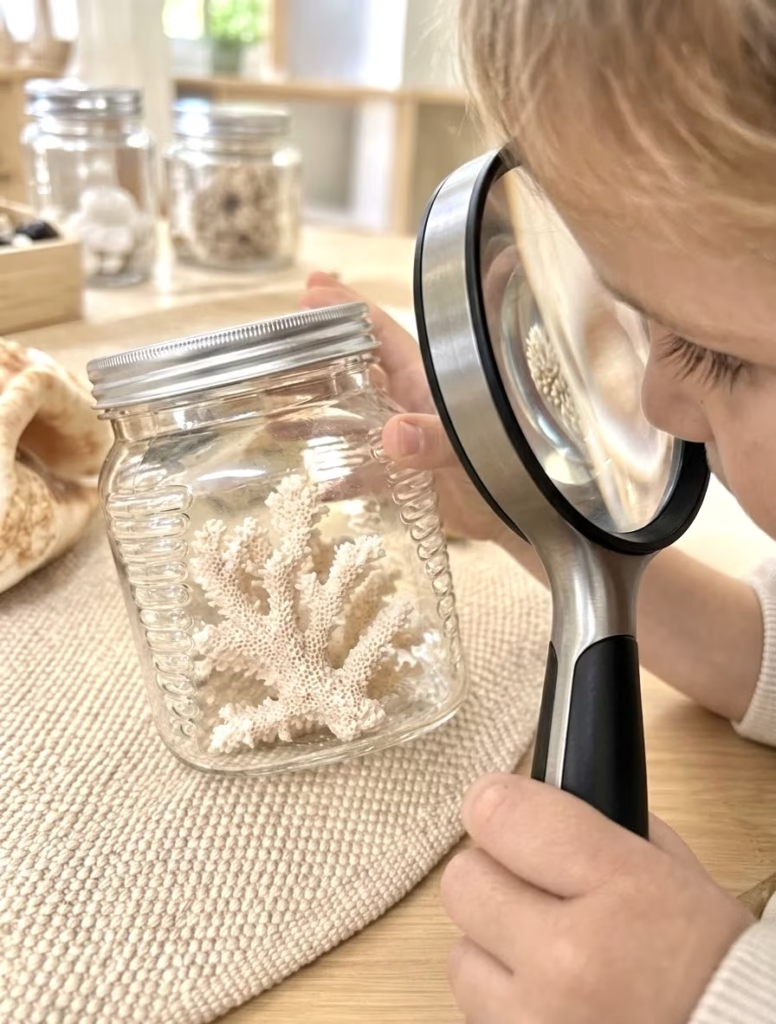
Offer magnifying glasses, sketchbooks, building materials, nature journals, nonfiction books, and art supplies.
Encourage Sorting and Classifying
Sort objects by color, size, shape, texture, or function to strengthen observation and early math skills.
Offer Open-Ended Materials
Provide blocks, clay, water, sand, and natural materials that can be used in countless creative ways.
Helpful Resources for Families
- Child Mind Institute
- NAEYC Family Resources
- PBS Parents
- Brooklyn Public Library
- New York Public Library
- Brooklyn Children’s Museum
Final Thought
Curiosity is the spark that drives learning. When children are encouraged to wonder, explore, investigate, and ask questions, they develop the confidence and skills needed to become creative thinkers, problem-solvers, and lifelong learners.