
Blooming Path Curriculum™
Our Blooming Path Curriculum™ is informed by contemporary research in early childhood development and is inspired by Reggio Emilia and Montessori principles. We recognize that children learn best through meaningful relationships, purposeful play, exploration, inquiry, and hands-on experiences. Our educators balance child-led discovery with intentional teaching: observing closely, asking questions, documenting children’s learning, introducing new ideas, and extending learning through engaging experiences. The Blooming Path Curriculum™ brings research and practice together in a distinctive approach that cultivates confident, curious, independent thinkers who are ready to Think Beyond.
Inspired by Montessori
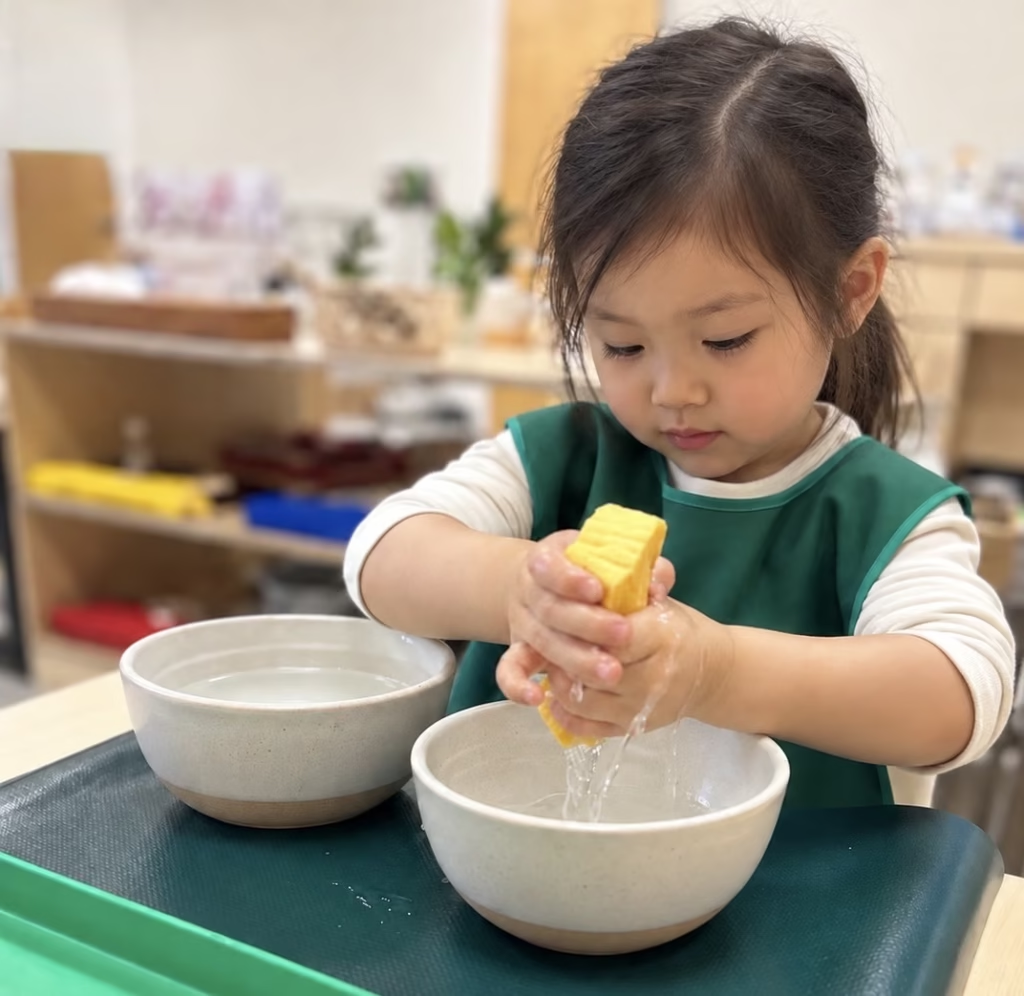
Montessori principles influence how we encourage independence, concentration, responsibility, and confidence. Purposeful materials, thoughtfully prepared environments, and opportunities for choice allow children to become active participants in their learning.
✓
Practical life experiences
✓
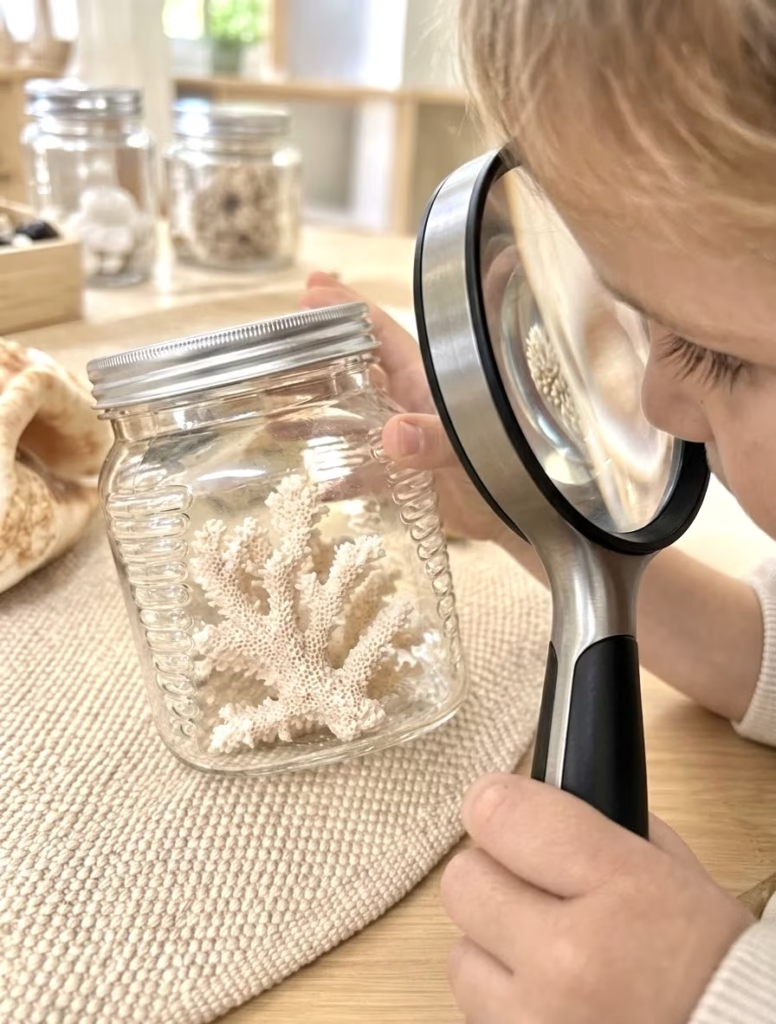
Sensorial exploration
✓
Independence and self-confidence
✓
Early literacy and mathematical thinking
Inspired by Reggio Emilia
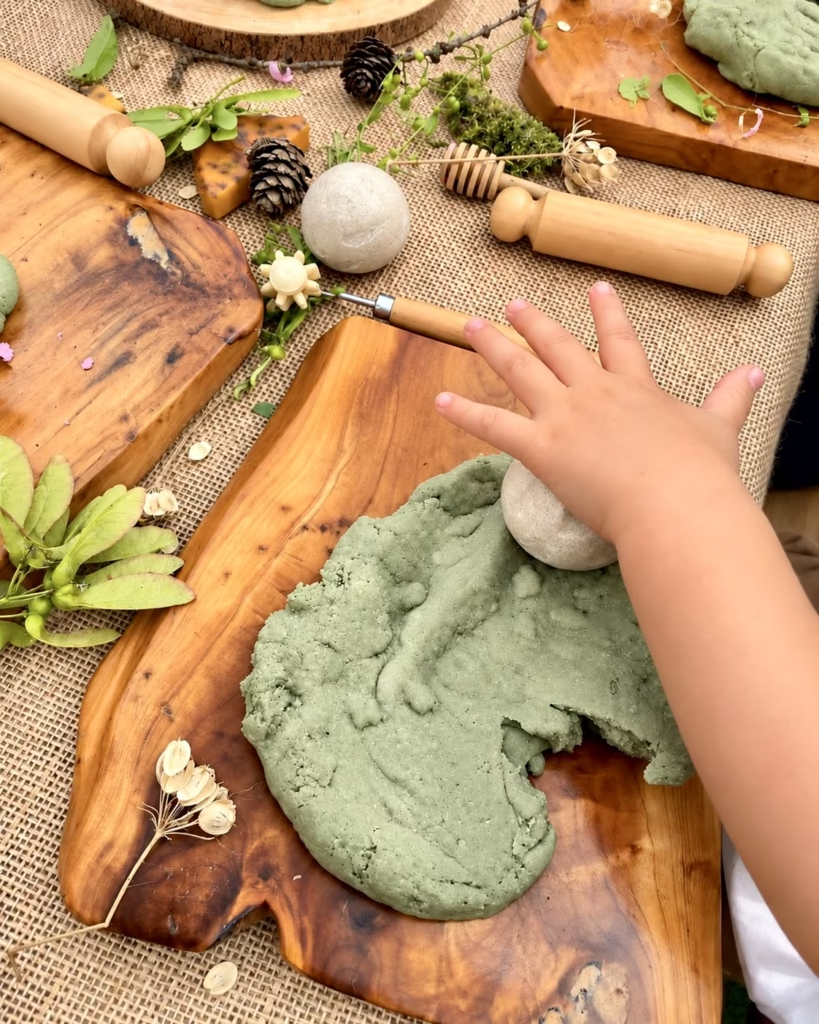
Reggio Emilia inspires us to see children as capable, curious thinkers whose questions and ideas have value. Educators listen, observe, and extend emerging interests into meaningful opportunities for deeper exploration.
✓
Inquiry and project-based learning
✓
Open-ended materials and creative expression
✓
Art & Design
✓
Collaboration and relationships
✓
Environments designed to inspire discovery
Inquiry-Based Learning
Children’s questions and curiosity help shape the direction of learning. Through purposeful play and inquiry, children explore meaningful ideas, investigate questions, make connections, and develop deeper understanding of the world. Educators extend these investigations through hands-on experiences, experimentation, observation, and problem-solving. These experiences encourage children to ask questions, think creatively, persevere through challenges, and approach learning with curiosity and confidence.
What is Montessori Education?
Montessori education is a child-centered educational philosophy developed by Dr. Maria Montessori (1870–1952). Based on scientific observation of children's natural development, the Montessori approach recognizes that children are naturally curious, capable, and eager to learn. Within a carefully prepared environment, children are encouraged to explore, make purposeful choices, and learn at their own pace. Through meaningful, hands-on experiences, they develop independence, concentration, confidence, responsibility, and a lifelong love of learning.
The Origins of Montessori
The Montessori Method was developed by Dr. Maria Montessori, an Italian physician and educator. In 1907, she opened the first Casa dei Bambini (Children's House) in Rome, Italy. Through careful observation, she discovered that children flourish when they are given meaningful work, freedom within clear boundaries, and an environment designed to meet their developmental needs. Her educational philosophy has inspired schools in more than 140 countries.
Core Principles of Montessori
Respect for the Child
Every child is viewed as a unique individual with their own interests, strengths, abilities, and pace of development.
The Prepared Environment
Classrooms are intentionally designed to support independence, exploration, concentration, and purposeful learning.
Follow the Child
Educators carefully observe each child and prepare an environment that supports the child's developmental readiness, interests, and emerging abilities.
Hands-On Learning
Children learn through specialized Montessori materials that move from concrete experiences to abstract understanding.
Freedom Within Limits
Children choose meaningful work within a carefully prepared environment that includes clear expectations and consistent routines.
The Absorbent Mind
The first six years of life are viewed as a period in which children effortlessly absorb knowledge, language, culture, and experiences from their environment.
Sensitive Periods
Children experience periods of heightened readiness for language, movement, order, sensory exploration, and social development.
Practical Life
Activities such as pouring, dressing, cleaning, food preparation, and caring for the environment develop independence, concentration, coordination, order, responsibility, and self-confidence.
Sensorial Education
Specialized materials refine the senses and strengthen observation, comparison, classification, vocabulary, and logical thinking.
Language Development
Language grows through conversation, storytelling, phonetic materials, reading, writing, and meaningful communication.
Mathematics
Materials such as Number Rods, Golden Beads, and the Stamp Game help children progress naturally from concrete experiences to abstract mathematical thinking.
Grace and Courtesy
Lessons foster kindness, empathy, cooperation, peaceful conflict resolution, and respectful communication.
Learning Through Nature
Children explore and care for the natural world, developing appreciation and respect for the environment.
Montessori Supports Whole-Child Development
Intellectual growth
Social and emotional development
Physical coordination
Language and communication
Creativity and imagination
Critical thinking and problem-solving
Independence and self-discipline
Responsibility and confidence
Respect for self, others, and the environment
Benefits of Montessori Education
Independence and self-confidence
Strong concentration and focus
Intrinsic motivation to learn
Critical thinking and problem-solving
Creativity and innovation
Self-discipline and responsibility
Effective communication and collaboration
Respect for others and the environment
A lifelong love of learning
Goals of Montessori Education
Foster confident, capable, and independent learners.
Encourage curiosity, creativity, and joyful discovery.
Support learning through purposeful, hands-on experiences.
Develop self-discipline through meaningful work.
Cultivate empathy, cooperation, and peaceful relationships.
Inspire responsibility for oneself, others, and the environment.
Nurture the whole child—mind, body, and spirit.
Learn More About Montessori
Association Montessori Internationale (AMI): https://montessori-ami.org
American Montessori Society (AMS): https://amshq.org
Montessori Foundation: https://www.montessori.org
Montessori Public: https://www.montessoripublic.org
Encyclopaedia Britannica – Maria Montessori: https://www.britannica.com/biography/Maria-Montessori
“The greatest sign of success for a teacher is to be able to say, 'The children are now working as if I did not exist.'” — Dr. Maria Montessori
What is Reggio Emilia Approach?
Background
The Reggio Emilia Approach is a child-centered educational philosophy that originated in the city of Reggio Emilia, Italy, following World War II. Developed through the collaborative efforts of educator Loris Malaguzzi (1920–1994) and local families, the approach is founded on the belief that children are strong, capable, curious, and full of potential. Rather than following a predetermined curriculum, the Reggio Emilia Approach views children as active participants in their own learning. Educators carefully observe children's interests, questions, and ideas, using them as the foundation for meaningful investigations and learning experiences. Through exploration, collaboration, creative expression, and inquiry, children construct knowledge while developing confidence, communication skills, critical thinking, and a lifelong love of learning. Today, the Reggio Emilia Approach is recognized around the world for its relationship-based philosophy, emphasis on creativity and collaboration, and commitment to honoring every child's unique voice, abilities, and potential.
Core Principles of Reggio Emilia
The Child as Capable
Children are viewed as strong, competent, resourceful learners who actively participate in constructing knowledge.
The Hundred Languages of Children
Children express ideas through drawing, painting, sculpture, music, movement, storytelling, dramatic play, construction, writing, conversation, light, clay, and many other forms of expression.
The Environment as the Third Teacher
Beautiful, organized learning environments with natural light and open-ended materials inspire exploration, creativity, collaboration, and discovery.
Relationships and Community
Meaningful relationships among children, educators, families, and the wider community form the foundation of learning.
Teachers as Co-Learners, Researchers, and Guides
Teachers observe, listen, document, ask thoughtful questions, and extend children's thinking through meaningful investigations.
Inquiry and Emergent Curriculum
Learning grows from children's interests, questions, and ideas. Teachers use careful observation and documentation to develop responsive, meaningful experiences.
Long-Term Projects (Progettazione)
Children investigate meaningful topics over time through research, experimentation, discussion, artistic expression, and reflection.
Documentation as Visible Learning
Photographs, observations, conversations, portfolios, and children's work make learning visible, celebrate growth, and guide future learning.
The Atelier (Creative Studio)
Many Reggio-inspired schools include an atelier where children explore ideas using clay, paint, wire, light, recycled materials, natural objects, drawing, and construction.
Listening as a Way of Learning
Listening to children's ideas and theories is central to building meaningful relationships and deeper understanding.
Nature and Outdoor Learning
Nature is viewed as an extension of the classroom and inspires curiosity, environmental awareness, and scientific thinking.
Reggio Emilia Supports Whole-Child Development
Intellectual growth
Social and emotional development
Creativity and imagination
Communication and language
Critical thinking and problem-solving
Collaboration and teamwork
Confidence and resilience
Curiosity and innovation
Respect for self, others, and the environment
Benefits of the Reggio Emilia Approach
Curiosity and creativity
Independence and confidence
Critical thinking and problem-solving
Strong communication skills
Collaboration and teamwork
Emotional intelligence and empathy
Hands-on learning
Respect for nature and community
Strong family-school partnerships
A lifelong love of learning
Learn More About Reggio Emilia
Reggio Children: https://www.reggiochildren.it
North American Reggio Emilia Alliance (NAREA): https://www.reggioalliance.org
Reggio Emilia Australia Information Exchange: https://www.reggioaustralia.org.au
“Our task, regarding creativity, is to help children climb their own mountains, as high as possible.” — Loris Malaguzzi