
What Is Loose Parts Play?
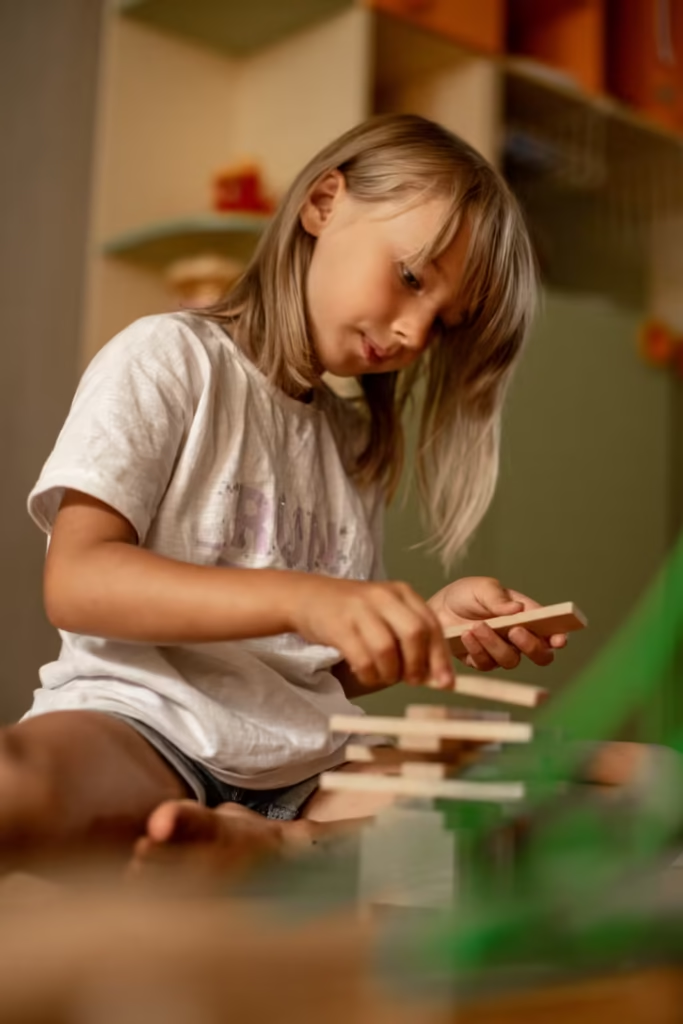
Learning Through Exploration, Creativity, and Discovery
Children are naturally curious. Give them a collection of interesting materials, and they will sort, stack, build, compare, create, and imagine in ways that support meaningful learning. Loose parts are open-ended materials that children can move, combine, redesign, take apart, and use in countless ways. Unlike traditional toys with a specific purpose, loose parts encourage children to think creatively and discover their own solutions.
What Are Loose Parts?
- Rocks and pebbles
- Pinecones and sticks
- Shells and seed pods
- Wooden blocks and rings
- Fabric pieces and ribbons
- Corks and bottle caps
- Buttons and beads
- Recycled materials and found objects
Why Are Loose Parts Important?
Creativity and Imagination
Children transform simple materials into buildings, inventions, artwork, stories, and imaginative worlds.
Problem Solving and Critical Thinking
Children test ideas, make predictions, evaluate outcomes, and adjust their plans as they build and create.
Early Math Concepts
Sorting, counting, patterning, measuring, comparing, and balancing all emerge naturally through play.
Language Development
Children describe their creations, share ideas, ask questions, and engage in meaningful conversations.
Collaboration and Social Skills
Working together with loose parts encourages communication, cooperation, negotiation, and teamwork.
Independence and Confidence
Open-ended materials allow children to make choices, take risks, and develop confidence in their own abilities.
Learning in Action
A child collecting rocks on the playground may begin by sorting them by size or color. Soon they may count them, create patterns, compare quantities, build structures, or invent imaginative stories around their discoveries.
The Benefits of Loose Parts Play
- Creativity and imagination
- Critical thinking skills
- Problem-solving abilities
- Early math concepts
- Language and communication skills
- Collaboration and teamwork
- Independence and confidence
- Curiosity and a love of learning
Play Is Meaningful Learning
When children are given the freedom to explore open-ended materials, they become active participants in their own learning. Through experimentation, discovery, and creative expression, loose parts play transforms everyday materials into powerful opportunities for growth and learning.
“Play is the highest form of research.” — Albert Einstein